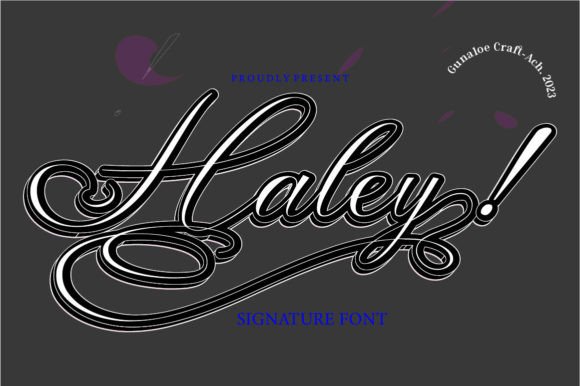
Haley: A Signature Calligraphy Font for Modern Branding
The cursor blinked on a blank artboard, and I knew the client needed more than just a logo; they needed a personality. The project was a boutique skincare line that wanted to feel organic yet luxurious, a delicate balance that often feels impossible to strike in digital design. I opened my font library and pulled up Haley, a signature calligraphy font from the Script Amp collection. It wasn't just another decorative typeface; it felt like a tool ready to solve a specific creative problem.
I started by sketching a logotype concept directly into the software. As soon as I typed the brand name, the letters flowed with a natural rhythm that mimicked a hand holding a fine nib. Unlike many script fonts that feel stiff or overly uniform, Haley captured the subtle imperfections of real handwriting without sacrificing legibility. It sat perfectly on the mockup for their product packaging, looking equally at home embossed on cream-colored paper or rendered in gold foil on a sleek black box.
The Personality of a Handcrafted Typeface
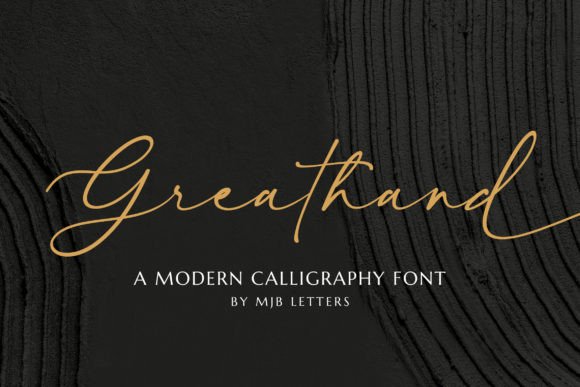
When you first encounter Haley, you notice the immediate warmth it brings to a layout. It is not an aggressive display font meant to shout, but rather an elegant voice whispering sophistication. This script font bridges the gap between formal calligraphy and casual handwritten styles, making it incredibly versatile for various applications. Whether you are designing a wedding invitation suite or a modern web title, the character of this typeface adapts to the mood you want to set.
In my testing, I found that Haley excels when used as a primary headline or a logo font. Its fluid strokes create a visual hierarchy that guides the eye naturally across the page. For a book cover or movie title, it adds a layer of narrative depth before the reader even processes the text. The weight distribution is well-balanced, ensuring that the thin hairlines don't disappear when scaled down, while the thicker downstrokes provide enough presence to anchor a design. This makes it a standout choice among premium fonts for designers who need reliability alongside beauty.
Real-World Application in Brand Identity
To truly understand how Haley performs, I placed it on a series of assets for a local bakery rebrand. The challenge was to make the identity feel artisanal without looking dated. Using Haley for the main logo allowed the brand to communicate craftsmanship instantly. When I moved to the business card design, the font's ligatures and swashes added a touch of flair that elevated the entire piece. It didn't look like a template; it looked custom-made.
I also tested the font on social media graphics for Instagram and Pinterest. In the crowded feed of visual content, Haley stood out because of its unique flow. It works beautifully for short phrases, quotes, or key messages where a sans serif might feel too rigid. However, I noticed that for long-form content like blog posts or detailed product descriptions, it would be overwhelming. That is where smart font pairing becomes essential. Pairing Haley with a clean, geometric sans serif for body text creates a perfect contrast, allowing the script to shine as the star while the supporting typeface ensures readability.
Technical Strengths and Design Assets
From a technical standpoint, Haley delivers what modern designers expect from a high-quality commercial font. The file package includes a robust set of alternates, which allows for endless variation in letter combinations. This means you can avoid repetitive patterns in your designs, adding a layer of authenticity that is crucial for branding. The inclusion of swashes gives you the option to add extra flourish to the beginning or end of words, perfect for creating dynamic logos or decorative headers.
The multilingual support is another significant plus, expanding the utility of the font for international projects. If you are working on a global brand identity, knowing that the characters maintain their style across different languages is a relief. Additionally, the availability of webfont formats ensures that the elegance of the typeface translates seamlessly to digital screens, maintaining its crispness on everything from mobile devices to large desktop monitors.
For those interested in editorial design, Haley offers a distinct advantage. On magazine covers or chapter headings, it commands attention without dominating the layout. It pairs exceptionally well with classic serif fonts, creating a timeless aesthetic that feels both established and contemporary. This combination is particularly effective for fashion brands, lifestyle magazines, or luxury goods where heritage and modernity must coexist.
Where Haley Shines and Where to Pause
While Haley is a powerful asset, it is not a one-size-fits-all solution. It is best suited for display purposes, such as logos, titles, posters, and packaging labels. Trying to use it for small body text or dense blocks of copy will likely result in poor readability and visual fatigue. The intricate details of the calligraphy style can become muddy at very small sizes, so it requires careful consideration of scale.
Furthermore, if your project demands a strictly corporate or minimalist aesthetic, this font might be too expressive. Formal financial reports or legal documents generally require more neutral typefaces. However, for creative studios, handmade sellers, online shop owners, and content creators, Haley offers a unique way to inject personality into their visual communication. It transforms standard layouts into memorable experiences.
Before committing to a final design, I always recommend testing the font in context. Create a few variations of your brand board using Haley alongside your chosen secondary typefaces. Mock up a product label or a website header to see how it interacts with imagery and color. This practical approach helps you gauge whether the font truly supports your brand message or if it distracts from it.
Finally, remember to review the licensing terms carefully. As a commercial font, using Haley in client work, merchandise, or digital products requires the appropriate license. Ensuring you have the correct permissions protects both you and your clients from potential legal issues. With the right usage, Haley proves to be more than just a pretty font; it is a strategic design element that elevates any brand identity project.